Hey Neighbour,
The fall conference season is upon us, and we’re gearing up for a busy few weeks at some exciting events.
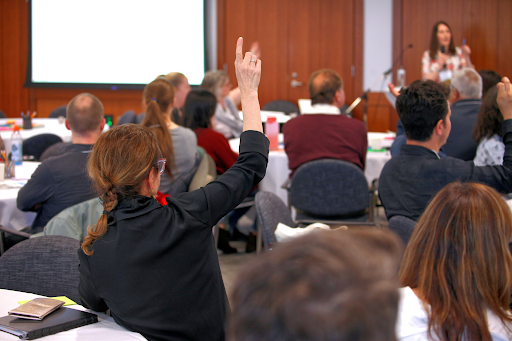
First up, on October 21st and 22nd, we’ll be at the UBC Habitat Symposium, where experts will explore and unpack four key themes related to housing, land, and participatory planning: Adequate and Affordable Housing, Participatory Planning & Governance, Climate Risk & Resilience, and Enabling Innovation.
Then, on October 24th, we’ll be at the CHF-BC Fall Education Conference. Here, our Mitacs intern Claire Dreyfuss, will host a workshop on aging in place in cooperative housing, while our Project Director, Michelle Hoar, will join a panel and discuss all things social connection, aging in place, and Hey Neighbour Collective.
Last but not least, from November 16th – 18th, our team will be at Housing Central! On Monday, November 16th, we’ll join a panel moderated by BC’s Seniors Housing Advocate, Dan Levitt, alongside Jenny Konkin (Whole Way House), and Grant Haddock (Haddock and Company Lawyers). Together, we’ll explore best practices for aging in place in multi-unit housing. Then, on Tuesday, November 17th, we’re teaming up with Entres Nous Femmes Society, Brightside Community Homes Foundation, New Chelsea Society, and SFU Urban Studies to “Measure What Matters.” We’ll discuss the importance of administering resident surveys, and why they’re even better when we work together.
Find more information about each of our presentations on our website.
And, if you see us around, please come say hello!
|
Back in May, we invited you to join us for our upcoming building tours. Now, for those of you who missed them, we have the recaps! Authored by Renewable Cities, these recaps offer an insider look into each building, taking you through the built environment, look and feel, amenity spaces, and all the little details you’re probably curious about. They’re the next best thing to being there with us!
These two tours were hosted in partnership with our incredible colleagues at Renewable Cities and Happy Cities as part of our Housing That Connects Us project.
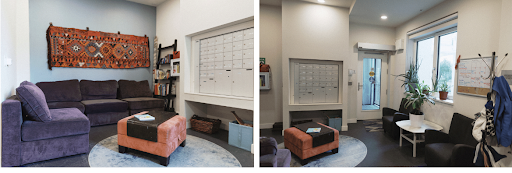
First up, we visited Little Mountain Co-housing, where each floor had a nook and each nook had its own little story. Operating under a cohousing model, this six-floor building combines the private spaces that make up each home with an abundance of shared spaces designed to foster neighbourly connections. Some unique features include a music room, coworking space, a social lobby (images of the lobby are below, by Sherry Lu), and a rooftop community garden. We especially loved the building’s flexible space, which can transform to meet residents’ changing needs. One day, it might be an exercise room; the next, a video game room, and, every now and then, a place for a giant sleepover!
Read the full article to learn more about Little Mountain Co-Housing, and how “co-housing" works.
|
Second, we partnered with The Zero Emissions Innovation Centre (ZEIC) to tour the L.J. Christmas Apartments, an affordable seniors’ rental building undergoing a deep energy retrofit – all while keeping tenants in place!
Seeing this project in action was amazing: a building from the 1960s being transformed towards operating with zero emissions, with 18 new affordable units, improved energy efficiency across the building, and nine new fully wheelchair-accessible units. It comes as no surprise that a project of this scale takes an immense amount of collaboration, coordination, patience, and planning between the housing provider, residents, board, construction teams, and consultants.
Learn more about their renovation process, (and their project planning) at the link below.
And, as a bonus, listen to a fireside chat between our Project Director, Michelle Hoar, and the Executive Director of LJC, Kathy Knight, as they discuss how LJC is implementing the retrofit while centering tenant experiences and preserving affordable housing for seniors.
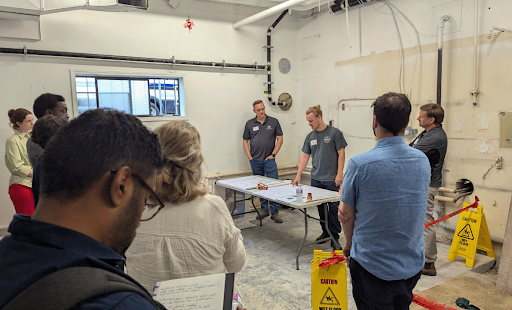
(The photo below, taken by Rebekah Parker of Renewable Cities, shows Narrow Gate Developments and New Life Electric staff showing the plans for the new mechanical room to tour participants.)
|
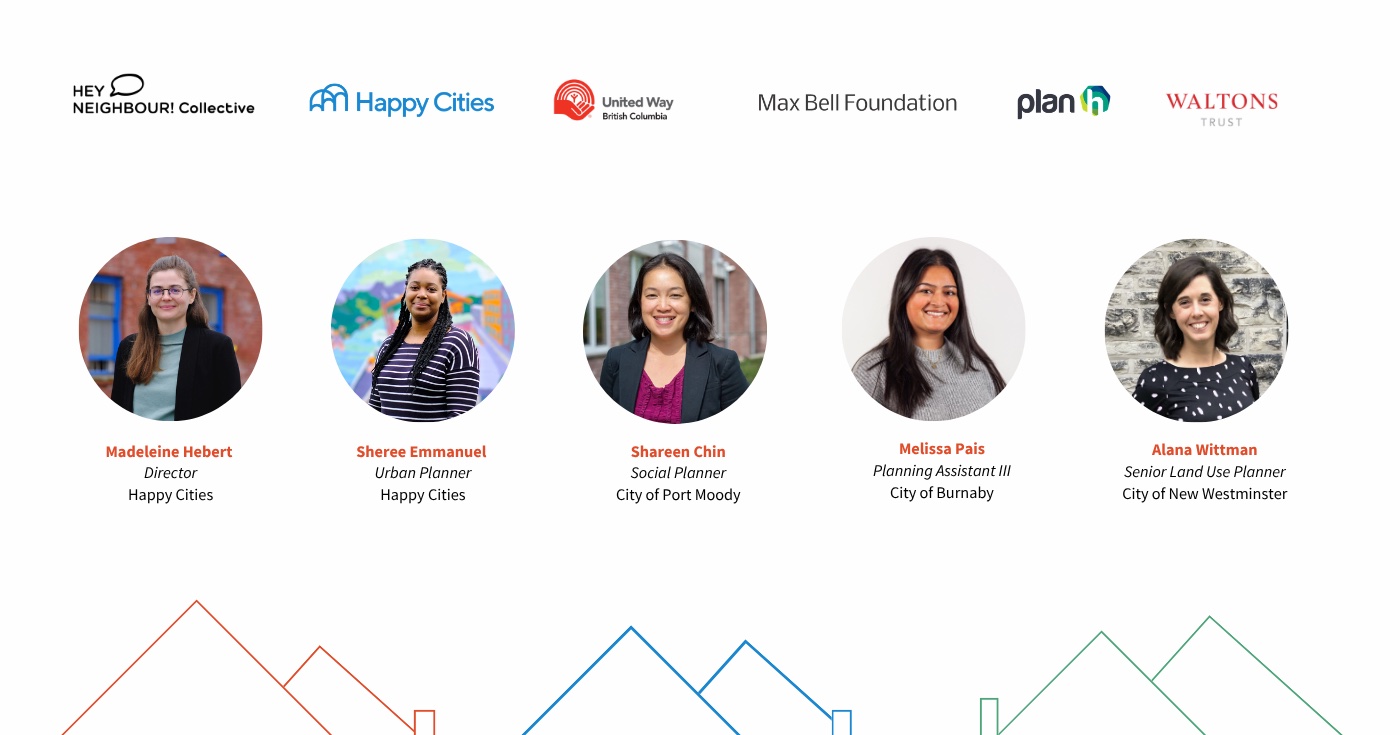
We need more buildings like these: ones that prioritize resident experiences and connections, and that prepare us for the unpredictabilities of extreme weather events, increasing social isolation, and housing unaffordability. So, in June, we teamed up with Happy Cities to talk to planners from the cities of Port Moody, New Westminster, and Burnaby to find out what’s on the horizon for affordable, sociable housing in Metro Vancouver.
In a jam-packed 90 minutes, Happy Cities gave an overview of the Housing that Connects Us research and toolkit. Planners then shared how they’re translating evidence–including from post-occupancy resident surveys–into practices and policies like incentive-based design guidelines. It’s exciting that there are levers in place to put social wellbeing at the centre of housing policy.
|
The June webinar was the third and final session in a three-part series focused on building social connection in housing. In the first webinar, we explored innovative, community-driven programs that foster social connections in housing. In the second, we looked at how housing operators can support and enable these programs within their buildings–and what they gain when they do.
|
If you’ve followed us for a while, you know what we say: social connection doesn’t happen in isolation. Buildings often need a catalyst to bring people together. Our partner, Building Resilient Neighbourhoods, recently shared two posts of reflections and learnings from their Neighbours Helping Neighbours pilot, an in-building program that aims to bring neighbours together.
The first, “How neighbourly connections can help us ‘age in the right place,’” discusses how residents worked through some of their initial resistances to engage in mutual support and found pathways forward together.
In the second, “No help needed, we’re Canadian!,” the team examines specifically how Canada’s dominant culture of celebrating and normalizing individualism can contribute to feelings of discomfort around asking for or offering help. They highlight how the Neighbours Helping Neighbours program helped shift these attitudes, making it easier for residents to reach out, offer support, and build connections with one another.
|
And that’s all from us for now! Thank you, as always, for keeping up with our work. Below, we’ve included a few resources you might find interesting.
Warmly,
The Hey Neighbour Collective Team
|
|
|
|
|